
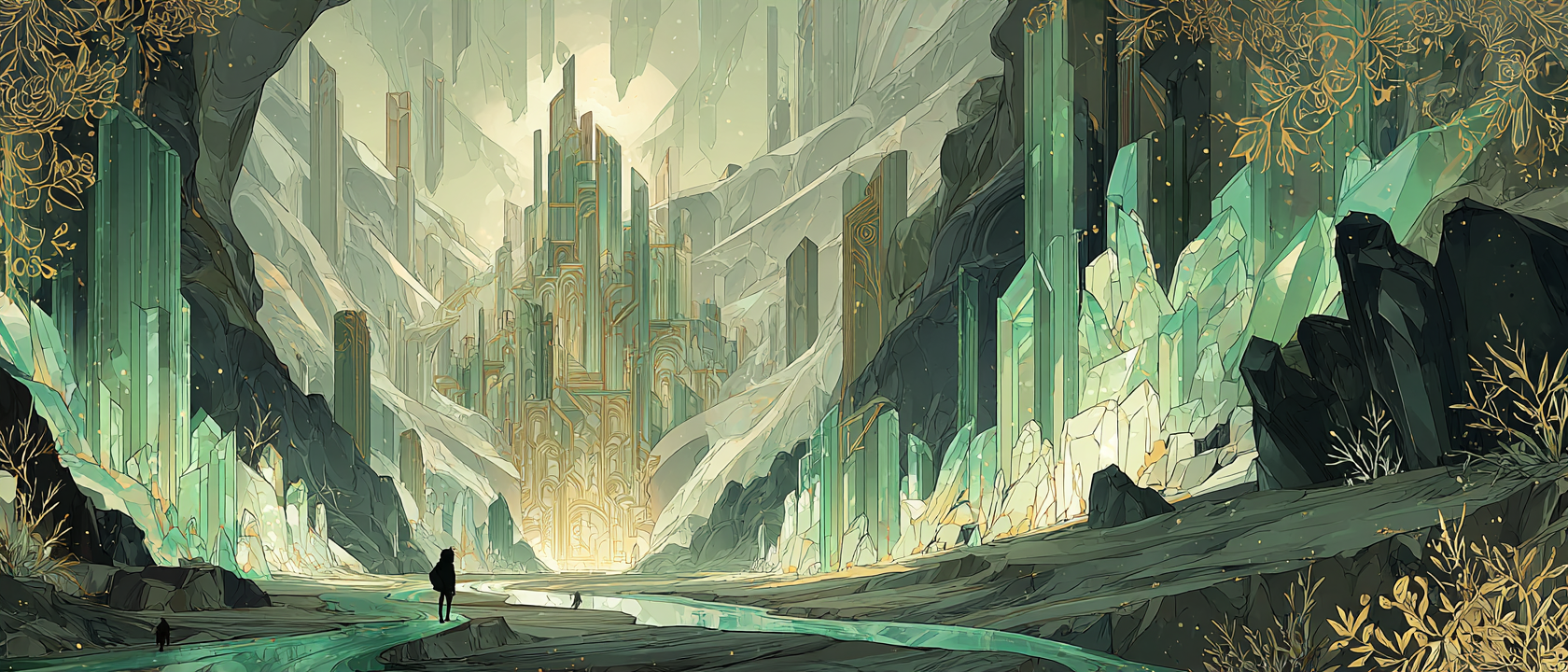
Veylori Elves
The silence after is the loudest thing there is.
There were once beautiful cities below the earth, full of gleaming crystal and humming magic. We followed the shining ley lines deep into the roots of the world. We hoarded secrets and arcane knowledge.
Then the Fall shattered our world.
We fled upward, into the cruel light, as whole cities were swallowed by the dark. We lost far too many souls to count. All that was left below would haunt us for generations.
The surface is loud, too bright. As are our kin. Despite all out similarities, it has been difficult for many of us to live with the Hartkin.
They call us cold. They call us distant. While the Fall affected all mortals, we had no way of going home. Others rebuilt while we dug and found only bones. So we live beneath the sun and try to build something new from the fragments of our lives.
The few who still dig, who claw their way back to hollows of crystal and rivers of silver, have been met with nothing but darkness. There is no going back. Our homes are silent graves, and that is how they should stay.
Depths
The Deep Elves, who call themselves the Veylori, are a people defined by collapse.
Once, they lived in vast crystalline cities beneath the surface of Ior, places of layered light, rune-driven mechanisms, and artificial beings shaped from magic and intent.
Then came the Fall.
Ley lines fractured, caverns buckled, and entire cities were crushed, flooded, or sealed forever. Survivors fled upward into a world that felt alien and hostile. Though centuries have passed, the Veylori do not speak of this as ancient history. To them, the Fall is ongoing.
Most Deep Elves now live on the surface, but they have never stopped looking towards the past.
Physical Traits
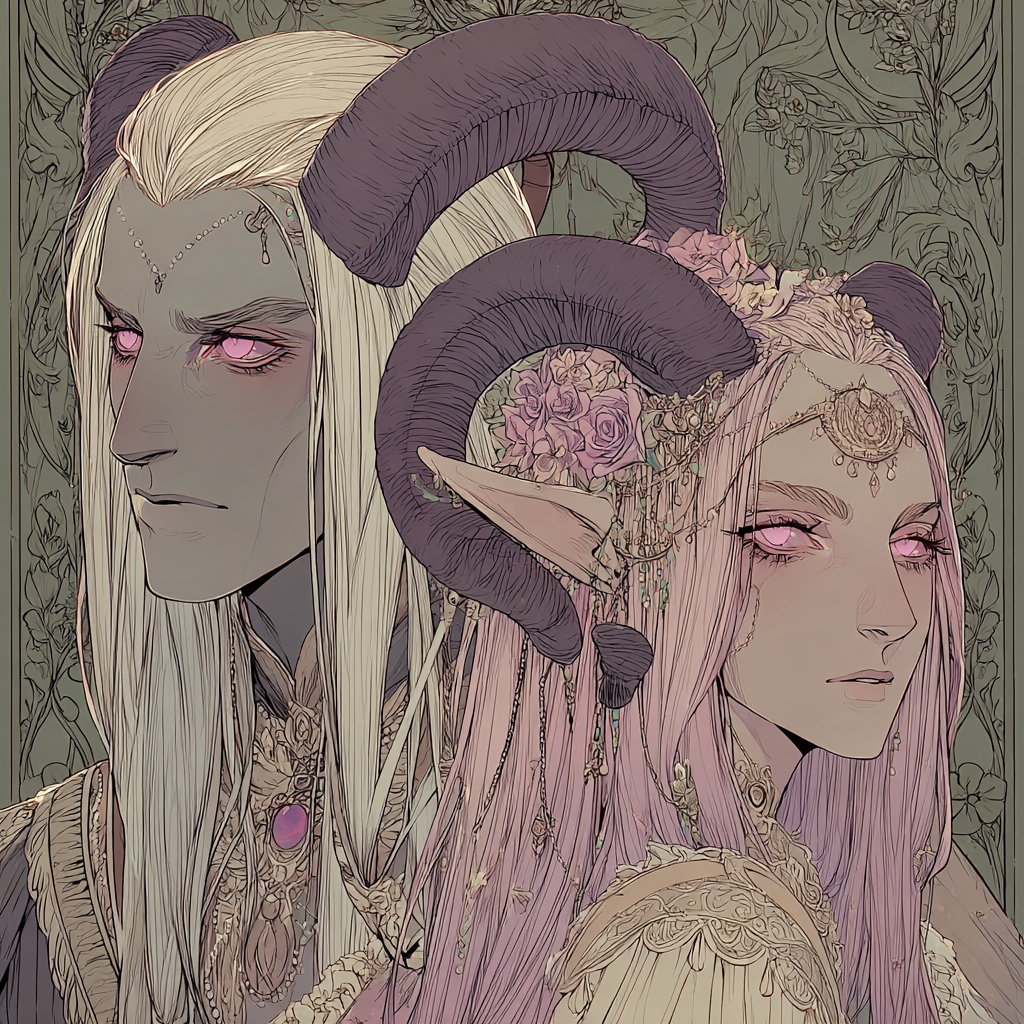
Veylori Deep Elves are tall, slender, and almost unnervingly still when at rest. They most often have pale or ashen skin, light hair, and light colored eyes in shades of pink, lavender, silver, or blue.
Their horns curve like those of rams or ibex, heavy and ridged rather than branching. These horns are denser than Hartkin antlers, heavy and twisting with age.
Deep Elves often show signs of prolonged low-light living: sensitivity to glare, preference for shaded spaces, and minimal tolerance for extremes of heat or cold.
Psychology & Social Disposition
Deep Elves are cautious in speech and action, often pausing before responding, weighing not just meaning but implication. This can read as coldness or arrogance to surfacers, though it is neither. Among their own kind, precision is kindness.
Many Veylori struggle with surface customs. In general, they find casual conversations and emotional displays pointless and wasteful. Their humor is dry and subtle, often being mistaken for rudeness, and they struggle to improvise.
Isolationism among the Veylori is common, preferring the company of others of their kind. They will intermingle with other races, with varying degrees of willingness, but younger generations have less difficulty in social interactions.
Diet & Sustenance
Deep Elves remain primarily carnivorous, though necessity has altered their habits.
Common Foods
Plant matter is consumed largely for medicinal or ritual purposes rather than sustenance.
Clothing & Personal Adornment
Veylori clothing favors function and durability. Like the Hartkin, they will generally follow the fashion trends of the area in which they live, but they tend to prefer more utilitarian options. Mineral dyes in greys, blues, and muted purples were common in Veylori settlements, and those hues are still preferred. It is almost out of habit that they continue to gravitate towards clothing designed to protect against sharp stone, unstable footing, and magical anomalies.
Like their kin, Veylori often decorate their horns. Many deep elves carve runic patterns into the outer layers of their horns, sometimes inlaying them with metal or crystal. Hammered caps and glowing charms are preferred by those who delve the ruins, while younger Veylori have taken to sharpened caps and even pierced rings.
The Reclamation Efforts
A minority of Veylori have turned their lives toward a singular purpose: reclaiming the cities Below.
These efforts are slow, dangerous, and frequently fatal. The ruins are unstable, with some cities being crushed in massive cave-ins or swallowed by sudden floods. There are areas of wild magic where leylines erupted and feral constructs still carrying out orders for long dead masters in a war that ended centuries ago.
Still, the Veylori dig. Some of the younger generation are convinced they can reclaim the former glory their ancestors spoke of. The elders simply hope to find fragments worth keeping to remind them of what was lost.
Death & Mourning
Deep Elves do not consume the dead, as the First Ones do, nor do they mark death with feast or song. They will carefully clean the body of their loved one, entombing them in stone or crystal. The memories of those who knew the deceased best are recorded, added to a community archive. They will record as much detail as possible, believing it will aid the passing of Nesmerleth's judgement.
The Three Lineages of Shirtheri
Hartkin, Veylori, and the First OnesThough all elves of Ior share a common origin in Shirtheri, the Predator, time, choice, and catastrophe have shaped her children into three distinct lineages. Each embodies a different response to the same inheritance: hunger, instinct, and the necessity of survival.
What follows is a comparative overview, commonly used by scholars, diplomats, and travelers who wish to survive contact with elven societies.
Origin & Self-Identity
The First Ones (Primal Elves) The First Ones see themselves as the true heirs of Shirtheri. They are what elves once were, and they remain unappologetically pure.Hartkin (Wood Elves) The Hartkin have chosen to integrated into "civilized" spaces, living alongside other species such as humans and dwarves. They do not deny their origin, but they believe mastery of instinct is the highest virtue.
Veylori (Deep Elves) The Veylori chose the farthest path, digging deep to seek knowledge and power. They prefer isolation, even after their cities were destroyed in the Fall. They allow their instincts to emerge only when it suits them unless they are in Rut.
Diet & Sustenance
All elven lineages are primarily carnivorous, but their relationship to food differs sharply.
First Ones: Hunting and consumption are sacred acts. Waste is taboo. Cannibalistic funerary rites are practiced to preserve memory and strength.
Hartkin: Meat is central to health, ritual, and social bonding. Sharing a kill is an act of trust.
Veylori: Meat is sustenance, but survival is paramount. Meals are quiet, efficient, and functional.
Plant matter is secondary for all three, typically used for medicine, ritual, or supplementation rather than nourishment.
The Rut
All elves experience the Rut, a seasonal intensification of predatory instinct and reproductive drive, but each lineage responds differently.
First Ones: Celebrate the Rut openly. It is seen as Shirtheri’s presence made manifest.
Hartkin: Regulate the Rut through ritual, partnership, and isolation when necessary. Loss of control is shameful.
Veylori: Suppress or redirect the Rut through discipline and work. Younger Veylori are heavily monitored, for they are the most likely to loose control and begin a frenzy.
Death & Mourning
Elven funerary traditions reflect their deepest values.
First Ones: Consume the eyes of the dead to absorb memory; flesh and bone are redistributed to tribe and land.
Hartkin: Preserve antlers and weapons, sharing a final hunted meal in silence to honor restraint and witness.
Veylori: Record the life of the deceased in archives; the body is laid to rest intact, memory preserved through written record.
All three believe the soul ultimately passes into Nesmerleth’s judgment, but disagree sharply on what honors the dead in life’s aftermath.
Antlers & Horns
First Ones: Massive, twisted and often asymmetric antlers like branching roots.
Hartkin: Branching deer, elk, or caribu antlers mark lineage, and social identity.
Veylori: Curved ram or ibex horns are etched with runes or capped with precious metals.
In all cases, horns are sacred. To damage or remove them without consent is considered a grievous offense. Elves who are exiled often have their horns or antlers cut off as a symbol of their crimes.
Whether embraced, restrained, or buried, Shirtheri’s blood endures in all her children, and in moments of crisis, it always answers the call.
Veylori (Deep Elves)
Keepers of the Broken Cities
The Veylori once ruled vast crystalline cities beneath the earth. After the Fall destroyed much of their civilization, most now live on the surface while a few attempt the dangerous reclamation of their ancient holds.
Ability Score Modifiers +2 Dexterity, +2 Intelligence, –2 Constitution
Size Medium Speed 30 ft.
Senses Darkvision 60 ft.
Defensive Traits
• Elven Immunities
Skill Traits
• Ancient Memory: +2 racial bonus on Knowledge (history) and Knowledge (engineering) checks.
• Ruin-Walker: +2 racial bonus on Disable Device checks involving ancient mechanisms or magical devices.
Special Traits
• Quiet Mind: +2 racial bonus on saving throws against confusion and charm effects.
Shared Elven Traits
All elves of Ior share certain cultural or biological characteristics.
Languages: Common, Elven. Bonus languages: Sylvan, Undercommon, Terran, Draconic.
Longevity: Elves age slowly and often live several centuries.
The Rut: All elves experience the Rut; a seasonal surge of predatory instinct and mating drive. Full elves feel it strongly, while half-elves usually experience milder effects.
GM Notes
Hartkin and Veylori elves are commonly playable ancestries in most regions of Ior. First Ones are rare and may require GM approval.
Half-elves occur most frequently among Hartkin and Veylori lineages. First One hybrids are extremely rare and often unsettling to other societies.


Comments