
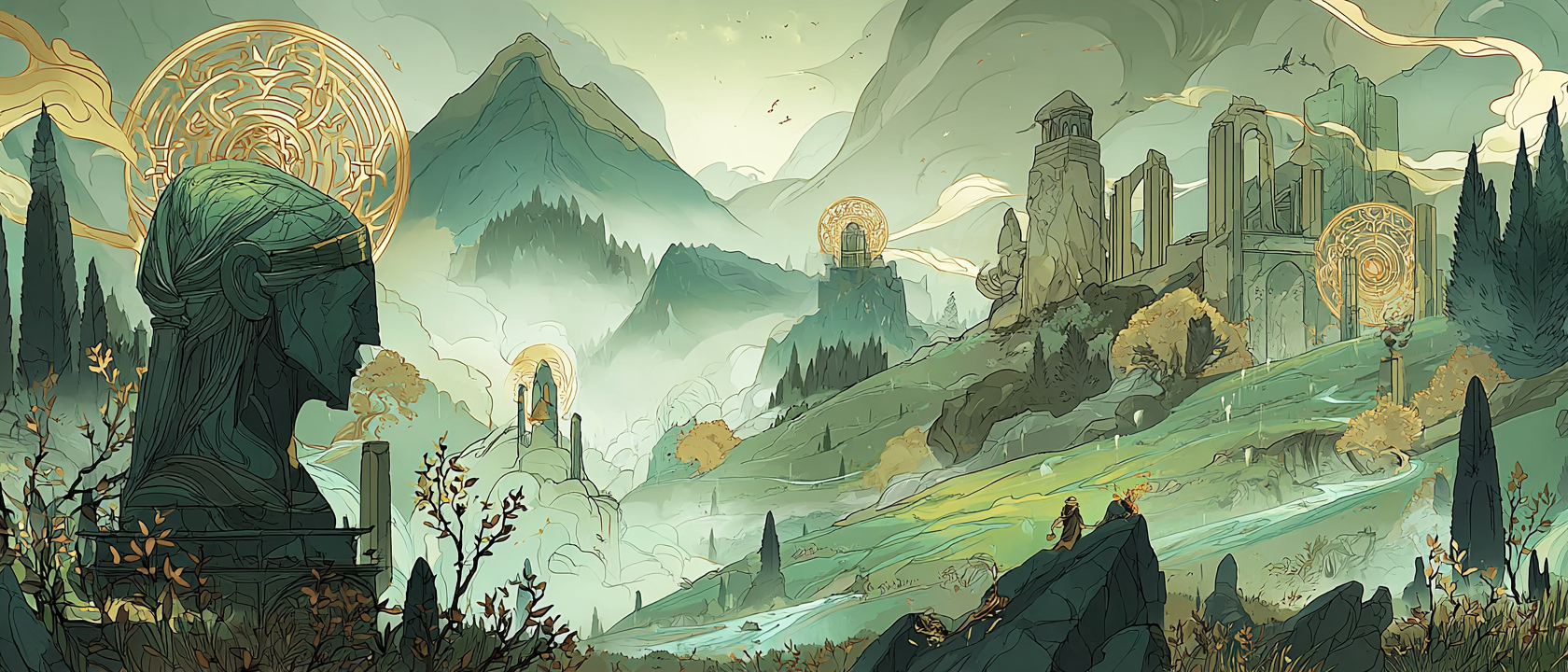
Hartkin Elves
We deny our nature and call it mercy. But never forget, we were made to hunt.
There was a time, long ago, when we ran through the wilds unchained. The hunt was in our blood and we had only the laws of predator and prey to govern us. That time is not wholly gone, only buried beneath stone, habit, and courtesy. We do not speak of it often, because to name a thing is to invite it nearer.
The humans think us civilized because we live as they do. We build where they build, dress as they dress, laugh at their tables and bury our dead in their earth. They take comfort in our assimilation, but it is conscious control, not domestication.
We are patient with them.
What they do not understand is that we have not abandoned the hunt, nor our instincts. Rather, we have learned to master them, knowing when to hunt and when to refrain.
The Predator made us to endure. We learned that strength could be sheathed. That hunger could wait. That restraint, practiced long enough, could feel like mercy.
Yet even now, we hear the Rut sing in our blood, building in our bones every season. We know which of us must withdraw, which must bind themselves to another, which must hunt until the shaking passes.
When we are kind, it is because we choose to be. We have found things to love. We protect them, even from ourselves, so we cage our instincts when we must and hone them for when they are needed.
Wild Kind
The Hartkin are the most widespread and socially integrated elven people of Ior. To most mortals, they are the elves: tall, antlered figures who walk openly among humans, trade in their markets, guard their borders, and raise families in cities of stone and timber alike.
Yet to mistake familiarity for gentleness is an error. The Hartkin are not tamed but they have chosen, through generations, to restrain their instincts.
Created by Shirtheri, the Predator, the Hartkin carry within them a lineage shaped by tooth, hunger, and pursuit. Civilization has not erased this inheritance; it has merely taught them when to harness it and when to suppress it.
Physical Traits
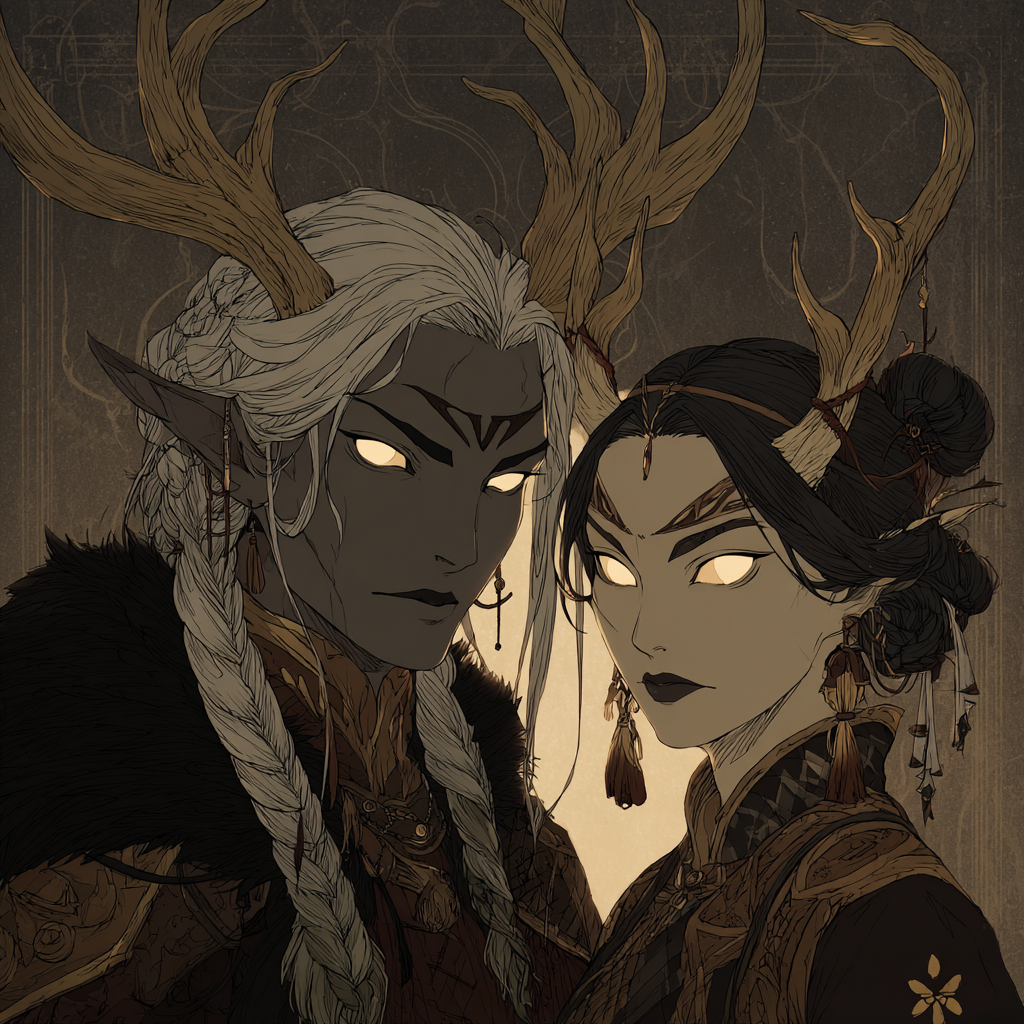
Hartkin elves are tall and long-limbed, with wide-set, watchful eyes and subtly sharpened canines. Their most defining feature is their antlers, which vary widely in shape and size. They tend to resemble those of deer, elk, or caribou, branching and growing with age. However, they do not shed their antlers as those creatures do.
There has been much debate as to why elves of all lineages developed horns and antlers like herding prey animals despite being the once apex predators of Ior. General consensus suggests they began as a method of camouflage, to blend in and hide more effectively from prey. But as time has moved on, and the different branches of elves have drifted away from one another, they have taken on a more cultural use.
Antlers are not purely decorative. They are living extensions of the Hartkin body, richly innervated and sensitive, and their condition is often read as a reflection of health, discipline, and fortune.
Psychology & Disposition
Hartkin are predators who have learned to live among prey. Even outside the Rut, they retain heightened awareness of movement, scent, and subtle shifts in emotion in others. This often manifests unintentionally as intimidation. A Hartkin may stare too long, stand too still, or smile at inopportune moments.
Among their own kind, these behaviors are unremarkable. Among humans, they are unsettling.
Hartkin culture prizes control above all else. A Hartkin who cannot govern themselves is considered far more dangerous, and shameful, than one who choses to embrace violence.
Diet & Relationship to Food
Hartkin are primarily carnivorous, even when living in agricultural societies.
Common Foods
Plant foods are eaten sparingly, and when they do, Hartkin prefer bitter herbs, roots, or fungi.
Sharing meat is deeply symbolic. To offer a portion of one’s kill is a gesture of trust, kinship, or courtship.
Clothing & Fashion
Hartkin fashion emphasizes mobility, durability, and ritual expression. Most often, they will simply adhere to the fashions of the area in which they live though they tend to favor neutral colors and breathable materials.
Clothing is typically layered and modular, allowing quick adaptation between hunt, travel, and social interaction.
Their antlers are often adorned in various ways, depending on social situations. Hartkin will often weave ribbons and flowers in their antlers during celebrations and drape them with veils or coat them in ash while in mourning. There are even some Hartkin who choose to add permanent, polished caps of gold or silver to the tines of their antlers.
Traditions & Rites
Hartkin children are raised with early emphasis on physical coordination, scent recognition, emotional regulation and responsibility for one's actions. Their games mimic pursuit, stealth, and mock hunts rather than human games of abstraction or chance. As Hartkin children come of age, they participate in their first true hunt. They are often accompanied by family who will help guide the child, but when the prey is in their sites, the adults will fall back. If the child succeeds in taking down their prey, they are considered young adults and a feast is held in their honor. If they fail, they must wait another year to try again.
Hartkin courtship is direct and ritualized, often including the sharing of meat, controlled sparring, and shared hunts. Bonded pairs will often hunt together during the Rut to prevent any uncontrolled aggression.
Death & Mourning
Hartkin funerary rites often resemble the traditions of the area in which they live, making their burials almost identical to their human counterparts. However, there are some traditions that make their rituals unique. The body of the deceased is often cleansed by the family, then anointed with ash and resin. The antlers are removed, often carved into memorials. The family and loved ones will often share a final meal in silence, with a plate of organ meat set for the dead.
The Three Lineages of Shirtheri
Hartkin, Veylori, and the First OnesThough all elves of Ior share a common origin in Shirtheri, the Predator, time, choice, and catastrophe have shaped her children into three distinct lineages. Each embodies a different response to the same inheritance: hunger, instinct, and the necessity of survival.
What follows is a comparative overview, commonly used by scholars, diplomats, and travelers who wish to survive contact with elven societies.
Origin & Self-Identity
The First Ones (Primal Elves) The First Ones see themselves as the true heirs of Shirtheri. They are what elves once were, and they remain unappologetically pure.Hartkin (Wood Elves) The Hartkin have chosen to integrated into "civilized" spaces, living alongside other species such as humans and dwarves. They do not deny their origin, but they believe mastery of instinct is the highest virtue.
Veylori (Deep Elves) The Veylori chose the farthest path, digging deep to seek knowledge and power. They prefer isolation, even after their cities were destroyed in the Fall. They allow their instincts to emerge only when it suits them unless they are in Rut.
Diet & Sustenance
All elven lineages are primarily carnivorous, but their relationship to food differs sharply.
First Ones: Hunting and consumption are sacred acts. Waste is taboo. Cannibalistic funerary rites are practiced to preserve memory and strength.
Hartkin: Meat is central to health, ritual, and social bonding. Sharing a kill is an act of trust.
Veylori: Meat is sustenance, but survival is paramount. Meals are quiet, efficient, and functional.
Plant matter is secondary for all three, typically used for medicine, ritual, or supplementation rather than nourishment.
The Rut
All elves experience the Rut, a seasonal intensification of predatory instinct and reproductive drive, but each lineage responds differently.
First Ones: Celebrate the Rut openly. It is seen as Shirtheri’s presence made manifest.
Hartkin: Regulate the Rut through ritual, partnership, and isolation when necessary. Loss of control is shameful.
Veylori: Suppress or redirect the Rut through discipline and work. Younger Veylori are heavily monitored, for they are the most likely to loose control and begin a frenzy.
Death & Mourning
Elven funerary traditions reflect their deepest values.
First Ones: Consume the eyes of the dead to absorb memory; flesh and bone are redistributed to tribe and land.
Hartkin: Preserve antlers and weapons, sharing a final hunted meal in silence to honor restraint and witness.
Veylori: Record the life of the deceased in archives; the body is laid to rest intact, memory preserved through written record.
All three believe the soul ultimately passes into Nesmerleth’s judgment, but disagree sharply on what honors the dead in life’s aftermath.
Antlers & Horns
First Ones: Massive, twisted and often asymmetric antlers like branching roots.
Hartkin: Branching deer, elk, or caribu antlers mark lineage, and social identity.
Veylori: Curved ram or ibex horns are etched with runes or capped with precious metals.
In all cases, horns are sacred. To damage or remove them without consent is considered a grievous offense. Elves who are exiled often have their horns or antlers cut off as a symbol of their crimes.
Whether embraced, restrained, or buried, Shirtheri’s blood endures in all her children, and in moments of crisis, it always answers the call.
Hartkin Elves
The Antlered Wardens
The Hartkin are the most widely integrated elven lineage, living among humans and other peoples. Though civilized, their senses remain keen and their instincts sharp.
Ability Score Modifiers +2 Dexterity, +2 Wisdom, –2 Constitution
Size Medium Speed 30 ft.
Senses Low-Light Vision
Defensive Traits
• Elven Immunities: Immune to magic sleep effects; +2 racial bonus on saves vs enchantment spells or effects.
Offensive Traits
• Predator’s Awareness: +2 racial bonus on Perception checks.
Skill Traits
• Mask of the Wild: +2 racial bonus on Stealth checks in natural terrain.
Special Traits
• Antlered Lineage: Hartkin possess natural antlers. These do not grant attacks but may be used for certain feats or cultural abilities at GM discretion.
• Rut-Touched: During periods of intense emotional stress or seasonal Rut, Hartkin gain +1 racial bonus on Survival checks but –1 on Diplomacy checks.
Shared Elven Traits
All elves of Ior share certain cultural or biological characteristics.
Languages: Common, Elven. Bonus languages: Sylvan, Undercommon, Terran, Draconic.
Longevity: Elves age slowly and often live several centuries.
The Rut: All elves experience the Rut; a seasonal surge of predatory instinct and mating drive. Full elves feel it strongly, while half-elves usually experience milder effects.
GM Notes
Hartkin and Veylori elves are commonly playable ancestries in most regions of Ior. First Ones are rare and may require GM approval.
Half-elves occur most frequently among Hartkin and Veylori lineages. First One hybrids are extremely rare and often unsettling to other societies.


Comments