
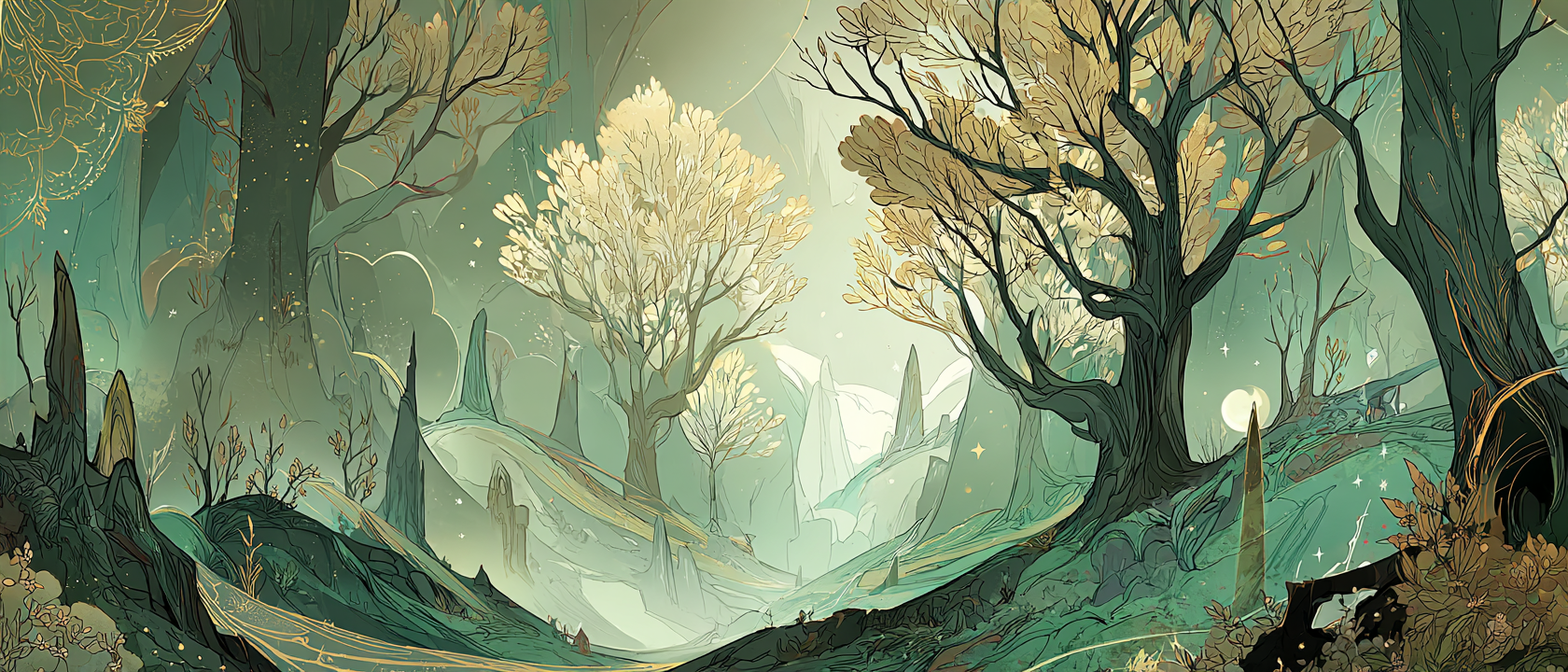
The First Ones
We are the hunt.
Before the world knew shadow and ruin, before the paths twisted beyond recognition, we ruled the wilds. We were what mortals feared when they travelled in dark places. Their stories warned of the wild hunt, a tide of swirling horns and gleaming claws.
The world changed, ended, and was reforged. Our kin went down separate paths but these paths led to weakness. They allowed the world to soften their edges in exchange for comfort.
We did not.
The wilds belong to those with the strength to claim them, and we have with blood and bone. Still, we are the monsters in the stories told by firelight and that is how it should be. But even we must watch the shadows more closely since the Titan broke the world.
We do not hate our kin who chose cities or stone. For a time, we hoped they would find their way back home to us but they have travelled too far. They have spent too long among the sheep to run with wolves anymore.
Our clawed steps haunted the paths of the world long before humans thought to claim them. And we will be here long after their bones turn to dust.
Tooth and Claw
The Primal Elves, known among themselves as the First Ones, are the oldest living elven lineage of Ior and the direct children of Shirtheri. They are not a deviation from elven nature, but its origin.
Where the Hartkin learned restraint and the Veylori learned preservation, the First Ones chose truth, the truth of hunger, dominance, and survival. They live in the deep wilds and forgotten places of the world, far from cities and roads, where Shirtheri’s law still reigns unchallenged.
To encounter the First Ones is to be judged; as worthy prey or simple cattle.
Physical Traits
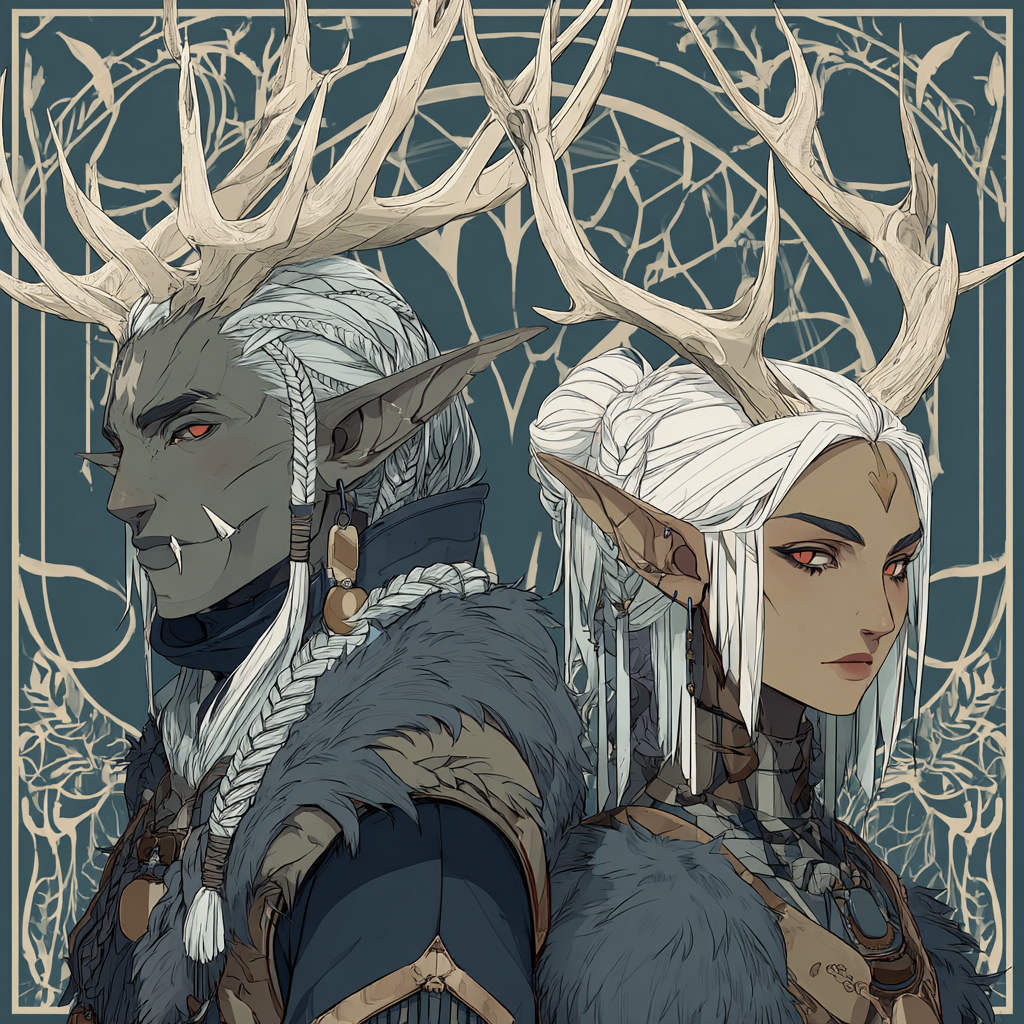
Primal Elves are unmistakable. They are tall, powerfully built, and crowned with massive, swirling antlers that resemble the twisting limbs of ancient trees. Their antlers grow continuously throughout their lifetime and are rarely symmetrical.
While the Hartkin and Veylori both show signs of their predatory nature, the First Ones are unmistakable with pronounced canines and heavy jaws. Their hands end in talon-like claws and their eyes reflect light like other hunting animals.
They often wear their hair in braids, and they decorate their skin with scarification, tattoos, and piercings.
Psychology & Worldview
The First Ones do not divide the world into good and evil, but hunter and prey. They believe civilization weakens the spirit by separating consequence from action. Hunger, fear, desire, and violence are not shameful, they are nature and instinct.
They do not seek cruelty necessarily, but they do not avoid it when it serves them. Mercy is not forbidden, but it, too, must serve them in some way, even if only for amusement.
Diet & the Sacred Hunt
Primal Elves are strict carnivores.
Common Sustenance
Some tribes practice limited cannibalism, not as sustenance, but as remembrance, believing that strength, memory, and spirit may be carried forward through flesh.
Clothing & Adornment
Primal Elves in temperate climates tend to wear little to nothing at all. When they do opt for clothing, it is most often pelts from prized kills or mantles of feathers or flowers for pure aesthetics. In colder climates, they prefer layered hides, though they prioritize movement above all.
Antlers are often adorned with feathers, bones, and trophies from their hunts.
Traditions & Rites
The Wild Hunt
Each tribe periodically undertakes a Wild Hunt. These target a powerful beast, testing endurance and dominance, concluding in a communal feast. Failure is not punished, but cowardice is.
Rite of First Blood
Young Primal Elves earn adulthood by taking their first kill alone. The blood is painted across the face and antlers, marking the moment they cease being sheltered by the tribe.
Death & Mourning
The First Ones do not bury their dead whole. They believe the body is a gift that must not be wasted. The eyes of the deceased are consumed by their closest kin to absorb their memories. The flesh is divided among the tribe or offered to predators based on the wishes of the deceased. Finally their bones are cleaned and placed in ancestral shrines while the antlers are preserved as spiritual tools.
Grief is expressed through ritual scarification, isolation, or the taking of a dangerous hunt.
The Three Lineages of Shirtheri
Hartkin, Veylori, and the First OnesThough all elves of Ior share a common origin in Shirtheri, the Predator, time, choice, and catastrophe have shaped her children into three distinct lineages. Each embodies a different response to the same inheritance: hunger, instinct, and the necessity of survival.
What follows is a comparative overview, commonly used by scholars, diplomats, and travelers who wish to survive contact with elven societies.
Origin & Self-Identity
The First Ones (Primal Elves) The First Ones see themselves as the true heirs of Shirtheri. They are what elves once were, and they remain unappologetically pure.Hartkin (Wood Elves) The Hartkin have chosen to integrated into "civilized" spaces, living alongside other species such as humans and dwarves. They do not deny their origin, but they believe mastery of instinct is the highest virtue.
Veylori (Deep Elves) The Veylori chose the farthest path, digging deep to seek knowledge and power. They prefer isolation, even after their cities were destroyed in the Fall. They allow their instincts to emerge only when it suits them unless they are in Rut.
Diet & Sustenance
All elven lineages are primarily carnivorous, but their relationship to food differs sharply.
First Ones: Hunting and consumption are sacred acts. Waste is taboo. Cannibalistic funerary rites are practiced to preserve memory and strength.
Hartkin: Meat is central to health, ritual, and social bonding. Sharing a kill is an act of trust.
Veylori: Meat is sustenance, but survival is paramount. Meals are quiet, efficient, and functional.
Plant matter is secondary for all three, typically used for medicine, ritual, or supplementation rather than nourishment.
The Rut
All elves experience the Rut, a seasonal intensification of predatory instinct and reproductive drive, but each lineage responds differently.
First Ones: Celebrate the Rut openly. It is seen as Shirtheri’s presence made manifest.
Hartkin: Regulate the Rut through ritual, partnership, and isolation when necessary. Loss of control is shameful.
Veylori: Suppress or redirect the Rut through discipline and work. Younger Veylori are heavily monitored, for they are the most likely to loose control and begin a frenzy.
Death & Mourning
Elven funerary traditions reflect their deepest values.
First Ones: Consume the eyes of the dead to absorb memory; flesh and bone are redistributed to tribe and land.
Hartkin: Preserve antlers and weapons, sharing a final hunted meal in silence to honor restraint and witness.
Veylori: Record the life of the deceased in archives; the body is laid to rest intact, memory preserved through written record.
All three believe the soul ultimately passes into Nesmerleth’s judgment, but disagree sharply on what honors the dead in life’s aftermath.
Antlers & Horns
First Ones: Massive, twisted and often asymmetric antlers like branching roots.
Hartkin: Branching deer, elk, or caribu antlers mark lineage, and social identity.
Veylori: Curved ram or ibex horns are etched with runes or capped with precious metals.
In all cases, horns are sacred. To damage or remove them without consent is considered a grievous offense. Elves who are exiled often have their horns or antlers cut off as a symbol of their crimes.
Whether embraced, restrained, or buried, Shirtheri’s blood endures in all her children, and in moments of crisis, it always answers the call.
First Ones (Primal Elves)
Children of the Old Hunt
The First Ones are the original form of the elven race, living in the deepest wilderness where Shirtheri’s law still rules. They embrace instinct rather than suppress it.
Ability Score Modifiers +2 Strength, +2 Dexterity, –2 Charisma
Size Medium Speed 30 ft.
Senses Low-Light Vision
Defensive Traits
• Wild Endurance: +2 racial bonus on Fortitude saves.
Offensive Traits
• Predator’s Bite: Natural bite attack (1d4).
Skill Traits
• Hunter’s Instinct: +2 racial bonus on Survival and Stealth.
Special Traits
• Scent: Detect creatures within 15 ft. by scent.
• Unsettling Presence: –2 penalty on Diplomacy checks with civilized societies but +2 bonus on Intimidate checks.
Shared Elven Traits
All elves of Ior share certain cultural or biological characteristics.
Languages: Common, Elven. Bonus languages: Sylvan, Undercommon, Terran, Draconic.
Longevity: Elves age slowly and often live several centuries.
The Rut: All elves experience the Rut; a seasonal surge of predatory instinct and mating drive. Full elves feel it strongly, while half-elves usually experience milder effects.
GM Notes
Hartkin and Veylori elves are commonly playable ancestries in most regions of Ior. First Ones are rare and may require GM approval.
Half-elves occur most frequently among Hartkin and Veylori lineages. First One hybrids are extremely rare and often unsettling to other societies.


Comments