
Narvik
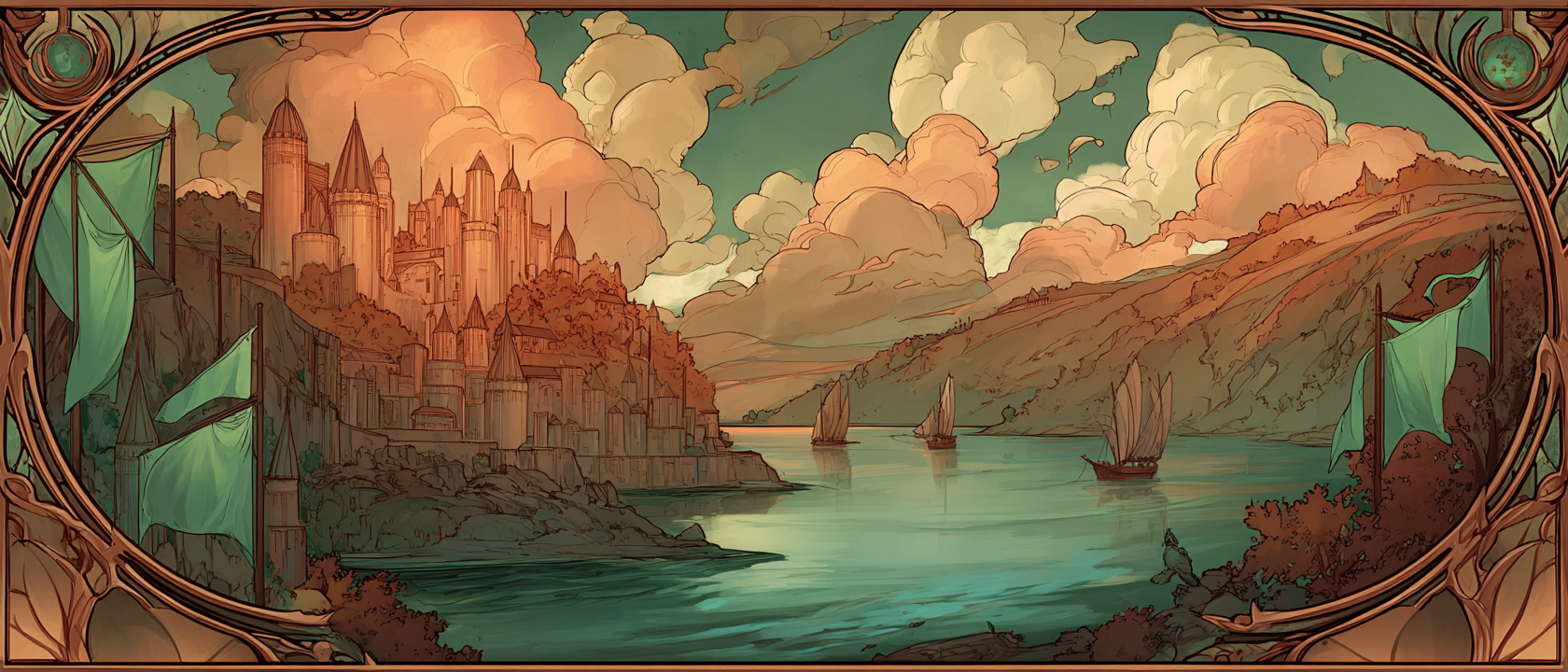
In the west of Kresla, where the rivers widen and slow before meeting the sea, there lies a kingdom without a crown.
Narvik was not forged in conquest, nor bound together by a singular banner lifted in defiance. It did not rise from prophecy or bloodline. It grew instead from ledger and timber, from the steady rhythm of trade, from hands calloused not by rope and oar.
Along its banks rose towns first, modest at the beginning, built of timber and reinforced by necessity. Barges laden with ore from Daggenfell, grain from inland farms, and wool from high pastures drifted down its current. What began as scattered settlements gradually intertwined, bound not by oath but by mutual survival.
The forests here are thick with pine, their trunks straight and tall as the masts they would one day become. The coastline is rugged, edged in rock and broken by natural harbors. Storms strike from the open sea without warning, and only those who know the waters intimately return safely to port.
Narvik learned early that survival depended not on dominating the land, but on understanding it.
To navigate river and tide is to read a language written in current and cloud.
It has never needed one.
In the years after the Fall, when arcane cities burned and centralized thrones faltered, the river towns faced a simple choice: fracture into irrelevance, or cooperate in survival. The wealth that flowed through their docks demanded protection, and protection demanded coordination.
Thus was born the League.
Merchant-princes rose not by divine right but by accumulated trust and capital. Guilds formed to regulate quality and price, to ensure that timber was true and iron unflawed. Burgher councils convened in torchlit halls where debate was fierce but structured. Votes were counted carefully, alliances negotiated deliberately.
In Narvik, authority flows from contribution.
A family that commands fleets and sustains trade routes commands influence. A guild that maintains roads and docks commands respect. No single voice governs unchecked, but neither is the League paralyzed, for coin has a way of clarifying priorities.
The League’s chambers overlook Narvik Port, where river meets sea. There, beneath vaulted beams blackened by centuries of hearthsmoke, the wealth of Kresla moves like tide. And every coin passes through the League's fingers.
Children are apprenticed young. A craft is not merely employment; it is inheritance. Smiths learn to temper steel that will not betray its wielder. Shipwrights shape hulls that will endure storm and siege alike. Brewers perfect recipes passed down through generations, because even ale is expected to be dependable.
Festivals revolve around cycles of trade and thaw. When the Rosewater breaks its winter ice, lanterns are lit along the banks and barges are launched with murmured blessings. When harvest wagons arrive from inland fields, market squares bloom with color and trade.
Temples are solid and well-kept, built of stone rather than ornament. Shrines to river spirits dot the banks, modest and weather-worn. Sailors leave offerings before long voyages; carved tokens, braided cord, small coins pressed into crevices between stone.
Magic in Narvik is not feared, but neither is it romanticized. Guild-enchanters inscribe protective sigils upon cargo holds. Minor wards are placed along warehouse doors. Storm-charms may be tied to a mast before departure. But magic must be accounted for.
Unregulated sorcery is fined, controlled, or expelled. Narvik does not distrust power; it distrusts unpredictability.
River barges, broad and flat-bottomed, can be transformed swiftly into warcraft, reinforced with iron and fitted with ballistae. Coastal patrol ships move in disciplined formations, guided by coded lanterns from watchtowers perched along rocky promontories.
Its infantry is professional and steady. Halberds glint beneath disciplined banners. Crossbow lines hold narrow streets and bridgeheads with practiced calm.
A battle lost is a loss of trade. A city burned is a broken network. Every decision is measured against long-term survival.
Outlying islands suffered swift raids. Watchtowers burned before signal-flames could be lit. Barges arrived in port empty, crews vanished without sign of struggle.
Within the League, debate has sharpened.
Some argue for neutrality, that trade can be maintained through careful negotiation even with a warlord. Others see neutrality as illusion, a delay rather than defense.
The Prince-Burgher who commands the largest fleet speaks cautiously of alliance, of coordinated resistance with Balonnor and Northern Etruria. His rivals weigh cost against risk.
Narvik stands upon a blade’s edge between profit and principle.
And if the tide that now rises across Kresla does not respect contract or commerce, Narvik must decide whether it will remain a league of merchants, or become something fiercer.
Narvik was not forged in conquest, nor bound together by a singular banner lifted in defiance. It did not rise from prophecy or bloodline. It grew instead from ledger and timber, from the steady rhythm of trade, from hands calloused not by rope and oar.
The Land of Arteries
The Rosewater River is the spine of Narvik. It descends from the uplands in silver channels, fed by distant mountains and seasonal melt, branching and re-branching until it becomes a web of life across the western valleys.Along its banks rose towns first, modest at the beginning, built of timber and reinforced by necessity. Barges laden with ore from Daggenfell, grain from inland farms, and wool from high pastures drifted down its current. What began as scattered settlements gradually intertwined, bound not by oath but by mutual survival.
The forests here are thick with pine, their trunks straight and tall as the masts they would one day become. The coastline is rugged, edged in rock and broken by natural harbors. Storms strike from the open sea without warning, and only those who know the waters intimately return safely to port.
Narvik learned early that survival depended not on dominating the land, but on understanding it.
To navigate river and tide is to read a language written in current and cloud.
A Kingdom of Councils
Narvik has no king.It has never needed one.
In the years after the Fall, when arcane cities burned and centralized thrones faltered, the river towns faced a simple choice: fracture into irrelevance, or cooperate in survival. The wealth that flowed through their docks demanded protection, and protection demanded coordination.
Thus was born the League.
Merchant-princes rose not by divine right but by accumulated trust and capital. Guilds formed to regulate quality and price, to ensure that timber was true and iron unflawed. Burgher councils convened in torchlit halls where debate was fierce but structured. Votes were counted carefully, alliances negotiated deliberately.
In Narvik, authority flows from contribution.
A family that commands fleets and sustains trade routes commands influence. A guild that maintains roads and docks commands respect. No single voice governs unchecked, but neither is the League paralyzed, for coin has a way of clarifying priorities.
The League’s chambers overlook Narvik Port, where river meets sea. There, beneath vaulted beams blackened by centuries of hearthsmoke, the wealth of Kresla moves like tide. And every coin passes through the League's fingers.
The Temperament of Iron
Narvikans are not known for flamboyance. Their humor is dry as seasoned timber. Their pride is quiet and enduring. They value reliability over spectacle, consistency over sudden brilliance.Children are apprenticed young. A craft is not merely employment; it is inheritance. Smiths learn to temper steel that will not betray its wielder. Shipwrights shape hulls that will endure storm and siege alike. Brewers perfect recipes passed down through generations, because even ale is expected to be dependable.
Festivals revolve around cycles of trade and thaw. When the Rosewater breaks its winter ice, lanterns are lit along the banks and barges are launched with murmured blessings. When harvest wagons arrive from inland fields, market squares bloom with color and trade.
Faith and Structure
Eanna is honored as sustainer of life, her light reflected in river-glass and morning mist. Aldanoc is invoked in council before major decisions, for wisdom is prized here as dearly as profit.Temples are solid and well-kept, built of stone rather than ornament. Shrines to river spirits dot the banks, modest and weather-worn. Sailors leave offerings before long voyages; carved tokens, braided cord, small coins pressed into crevices between stone.
Magic in Narvik is not feared, but neither is it romanticized. Guild-enchanters inscribe protective sigils upon cargo holds. Minor wards are placed along warehouse doors. Storm-charms may be tied to a mast before departure. But magic must be accounted for.
Unregulated sorcery is fined, controlled, or expelled. Narvik does not distrust power; it distrusts unpredictability.
The Fleet and the Wall
Narvik’s greatest strength lies not in cavalry or mountain holds, but in water and coordination.River barges, broad and flat-bottomed, can be transformed swiftly into warcraft, reinforced with iron and fitted with ballistae. Coastal patrol ships move in disciplined formations, guided by coded lanterns from watchtowers perched along rocky promontories.
Its infantry is professional and steady. Halberds glint beneath disciplined banners. Crossbow lines hold narrow streets and bridgeheads with practiced calm.
A battle lost is a loss of trade. A city burned is a broken network. Every decision is measured against long-term survival.
The Present Reckoning
For many seasons, Narvik believed distance and prudence would shield it from the chaos unfolding elsewhere in Kresla. The fall of Southern Etruria was observed with concern, but also with calculation. The fracture of Kolyama was regrettable, yet distant.Outlying islands suffered swift raids. Watchtowers burned before signal-flames could be lit. Barges arrived in port empty, crews vanished without sign of struggle.
Within the League, debate has sharpened.
Some argue for neutrality, that trade can be maintained through careful negotiation even with a warlord. Others see neutrality as illusion, a delay rather than defense.
The Prince-Burgher who commands the largest fleet speaks cautiously of alliance, of coordinated resistance with Balonnor and Northern Etruria. His rivals weigh cost against risk.
Narvik stands upon a blade’s edge between profit and principle.
And if the tide that now rises across Kresla does not respect contract or commerce, Narvik must decide whether it will remain a league of merchants, or become something fiercer.
Regional Ledger
Government: Merchant monarchy supported by trade guild councils Capital: Narvikar (River Crown City) Population: ~950,000 along river valleys and tributaries
Major Settlements
Narvikar
Southwatch
Rivermeet
Ironstrand
Primary Exports
River trade goods and mercantile brokerage
Fish and preserved river meat
Worked steel and tools
Shipbuilding
Primary Imports
Grain from Kolyama
Timber from the Silver Mist Hills and Fjollum
Wine from Etruria
Precious metals from Daggenfell
Trade Routes
Extensive river network linking eastern and northern Kresla
Trade barges connecting multiple inland regions
Military Strength
~9,000 professional soldiers
River navy of ~400 armed vessels
Strategic Importance
Controls inland river commerce across northern Kresla
Economic center for inter-kingdom trade


Comments