
Minotaurs; Children of War
They are among the younger races, created in the crucible of the First War between the gods and the Titan, when the world itself was still being scarred into its present shape. While humans, elves, dwarves, and others already walked the land, the minotaurs were fashioned deliberately, shaped by a greater demon as living weapons, an army meant to break divine lines and endure where mortal soldiers could not. Strength was carved into their bones. Fury was woven into their blood. Purpose was imposed, not chosen.
When the long chains of that design should have held forever, light intervened.
Eanna, goddess of life and sun, tempered what had been made only to destroy. In doing so, she granted the minotaurs the most dangerous gift imaginable: free will. They were no longer merely tools of war, but a people forced to decide what to do with bodies and instincts forged for violence in a world that already feared them.
Not all endured that choice.
Some fell deeper into their curse, bodies warping beneath infernal inheritance, horns splitting and multiplying, hides blackening, rage sharpening into something ungovernable. Others learned restraint, discipline, and identity, not by erasing what they were made to be, but by mastering it. Thus the minotaurs exist still between forces that never intended them to survive as people at all, caught between divinity, demonic will, and mortality.
They are nomads by tradition rather than necessity, scattered across nearly every climate of Ior. Their tribes move with purpose, each following its own codes, goals, and interpretations of what freedom means. Some keep entirely to themselves. Others trade, hire out as mercenaries, or attempt the long, difficult work of integration into human or elven lands. A few turn to banditry, not from mindless cruelty, but from bitterness toward a world that judges them by their origins rather than their actions.
Despite this scattering, the minotaurs are not without a center.
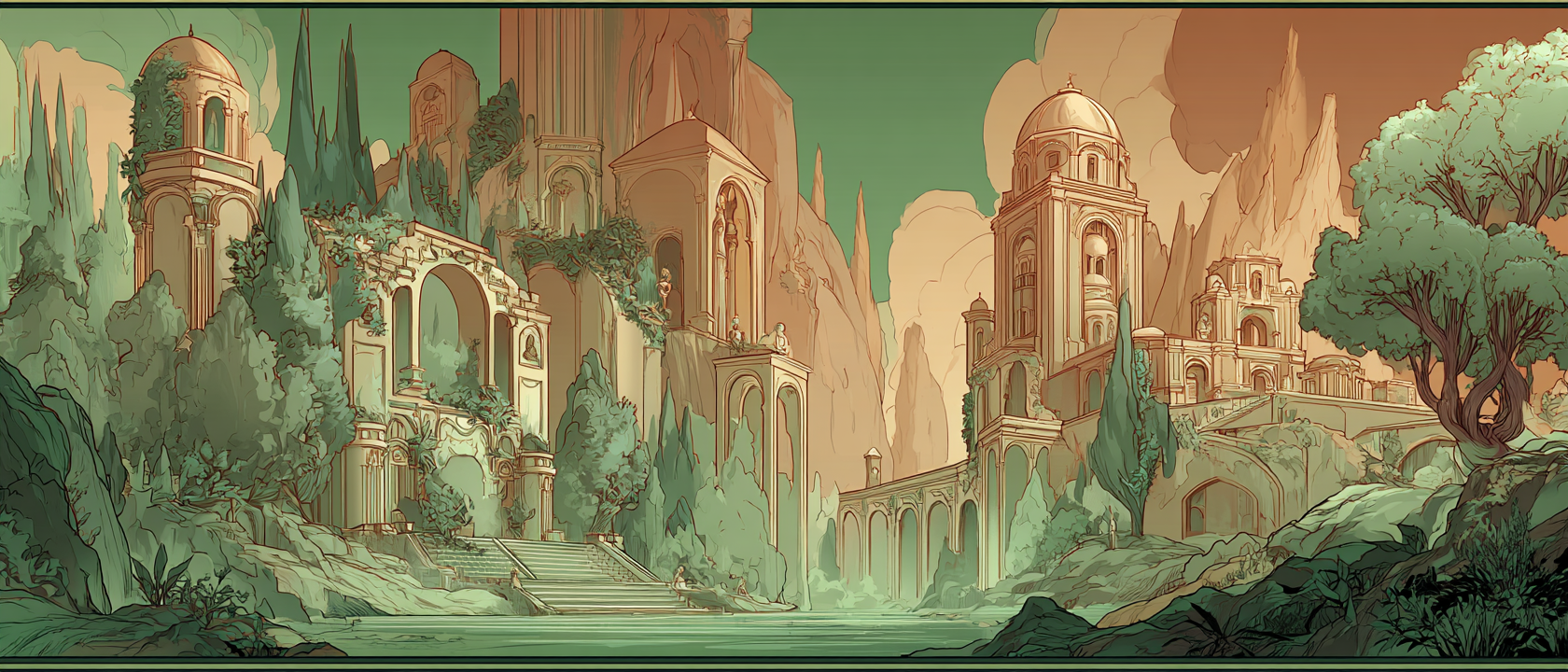
Upon a remote island lies their singular city, a place of stone, smoke, and tide-wind, where tribes gather under truce. Here elders meet to settle disputes that cannot be solved by strength alone. Here rituals are held, names are remembered, and festivals mark the turning of seasons and stars. It is a city without a king. Authority is earned through endurance, wisdom, and the visible mastery of one’s own nature.
Among the elders, it is customary to wear full bronze face masks, funerary in style, smooth, heavy, and expressionless. These masks are not meant to hide identity, but to remind all present that the self is something worn lightly. When judgment is passed, it is not the individual who speaks, but the weight of history behind them. Many elders honor Eanna, though their worship is layered with mysticism, omen-reading, and rites that blur the line between reverence and remembrance. To outsiders, their faith can feel unsettling, solemn, quiet, and heavy with unspoken things.
Minotaur culture values strength, but not brute violence alone. Cunning, patience, and control are held in equal esteem. A warrior who cannot master their own rage is seen as unfinished. Redemption is not preached as a virtue, but recognized as a possibility, rare, costly, and often paid for in blood or sacrifice.
Minotaurs are seldom numerous in any one place, and they are rarely trusted when first encountered. Yet those who earn their loyalty gain allies of relentless resolve. Those who provoke their wrath may find themselves facing not a monster, but a will that has spent a lifetime learning when to be unleashed.
They are living reminders of a truth Ior does not like to face: that even races born of war can choose what they become, and that choice, once given, can never be taken back.
Their island city serves as neutral ground. Weapons are bound or sealed upon entry. Old grudges are set aside under penalty of exile. This is where lineage disputes are settled, names are recorded, and rites of passage witnessed by more than one tribe, ensuring no single group controls the truth of history.
Masks worn by elders are cast in bronze or copper alloys, smooth-faced and solemn. They are never worn in battle. To don one is to speak not as oneself, but as a vessel for collective judgment.
The Standing Vigil: A night-long rite where participants remain awake and unmoving, listening to recitations of ancestral failures as well as triumphs.
The Offering of Breath: A quiet prayer given at dawn or dusk, breathing incense smoke skyward without spoken words.
The Severing: A rare rite of redemption, where a minotaur symbolically breaks from a past act or allegiance, often marked by ritual scarification or the melting down of a personal weapon.
Mysticism permeates their spiritual life. Dreams, tides, animal behavior, and solar halos are all read as signs, but never interpreted lightly.
Smoked or sun-dried meats wrapped in broad leaves
Root stews thickened with grain or crushed tubers
Fermented drinks brewed from fruit, honey, or coastal plants
Salted fish and sea greens traded from island tribes
Feasts are rare but monumental. When held, they last days, and every tribe present is expected to contribute, food is both sustenance and proof of good faith.
Adornment is symbolic rather than decorative:
Horn rings mark life milestones
Beaded cords record oaths taken or fulfilled
Tattoos and body paint depict journeys, victories
Minotaurs of Ior are not relics of an ancient age, but survivors of a violent beginning. Younger than most races, they live with the weight of having been made for something before they were allowed to decide who they are.
That tension defines them still, and always will.
When the long chains of that design should have held forever, light intervened.
Eanna, goddess of life and sun, tempered what had been made only to destroy. In doing so, she granted the minotaurs the most dangerous gift imaginable: free will. They were no longer merely tools of war, but a people forced to decide what to do with bodies and instincts forged for violence in a world that already feared them.
Not all endured that choice.
Some fell deeper into their curse, bodies warping beneath infernal inheritance, horns splitting and multiplying, hides blackening, rage sharpening into something ungovernable. Others learned restraint, discipline, and identity, not by erasing what they were made to be, but by mastering it. Thus the minotaurs exist still between forces that never intended them to survive as people at all, caught between divinity, demonic will, and mortality.
They are nomads by tradition rather than necessity, scattered across nearly every climate of Ior. Their tribes move with purpose, each following its own codes, goals, and interpretations of what freedom means. Some keep entirely to themselves. Others trade, hire out as mercenaries, or attempt the long, difficult work of integration into human or elven lands. A few turn to banditry, not from mindless cruelty, but from bitterness toward a world that judges them by their origins rather than their actions.
Despite this scattering, the minotaurs are not without a center.
Upon a remote island lies their singular city, a place of stone, smoke, and tide-wind, where tribes gather under truce. Here elders meet to settle disputes that cannot be solved by strength alone. Here rituals are held, names are remembered, and festivals mark the turning of seasons and stars. It is a city without a king. Authority is earned through endurance, wisdom, and the visible mastery of one’s own nature.
Among the elders, it is customary to wear full bronze face masks, funerary in style, smooth, heavy, and expressionless. These masks are not meant to hide identity, but to remind all present that the self is something worn lightly. When judgment is passed, it is not the individual who speaks, but the weight of history behind them. Many elders honor Eanna, though their worship is layered with mysticism, omen-reading, and rites that blur the line between reverence and remembrance. To outsiders, their faith can feel unsettling, solemn, quiet, and heavy with unspoken things.
Minotaur culture values strength, but not brute violence alone. Cunning, patience, and control are held in equal esteem. A warrior who cannot master their own rage is seen as unfinished. Redemption is not preached as a virtue, but recognized as a possibility, rare, costly, and often paid for in blood or sacrifice.
Minotaurs are seldom numerous in any one place, and they are rarely trusted when first encountered. Yet those who earn their loyalty gain allies of relentless resolve. Those who provoke their wrath may find themselves facing not a monster, but a will that has spent a lifetime learning when to be unleashed.
They are living reminders of a truth Ior does not like to face: that even races born of war can choose what they become, and that choice, once given, can never be taken back.
Culture & Social Structure
Minotaur society is tribal but not primitive, guided by councils, oaths, and shared memory rather than written law. Elders are respected not for age alone, but for visible mastery over self and circumstance. Leadership is situational: a war-leader may defer to a ritual-speaker, who in turn yields to a trader or pathfinder when the need arises.Their island city serves as neutral ground. Weapons are bound or sealed upon entry. Old grudges are set aside under penalty of exile. This is where lineage disputes are settled, names are recorded, and rites of passage witnessed by more than one tribe, ensuring no single group controls the truth of history.
Masks worn by elders are cast in bronze or copper alloys, smooth-faced and solemn. They are never worn in battle. To don one is to speak not as oneself, but as a vessel for collective judgment.
Traditions & Ritual Life
Minotaur rituals emphasize witness and endurance.The Standing Vigil: A night-long rite where participants remain awake and unmoving, listening to recitations of ancestral failures as well as triumphs.
The Offering of Breath: A quiet prayer given at dawn or dusk, breathing incense smoke skyward without spoken words.
The Severing: A rare rite of redemption, where a minotaur symbolically breaks from a past act or allegiance, often marked by ritual scarification or the melting down of a personal weapon.
Mysticism permeates their spiritual life. Dreams, tides, animal behavior, and solar halos are all read as signs, but never interpreted lightly.
Food & Sustenance
Minotaur cuisine is practical, communal, and deeply tied to travel.Feasts are rare but monumental. When held, they last days, and every tribe present is expected to contribute, food is both sustenance and proof of good faith.
Dress & Adornment
Minotaurs favor layered clothing designed for movement: wrapped cloth, sleeveless mantles, and wide belts used to secure tools and weapons. Materials include woven fibers, treated hides, shell-inlaid leather, and hammered bronze.Adornment is symbolic rather than decorative:
Minotaurs of Ior are not relics of an ancient age, but survivors of a violent beginning. Younger than most races, they live with the weight of having been made for something before they were allowed to decide who they are.
That tension defines them still, and always will.
Minotaurs of Ior; Subtypes
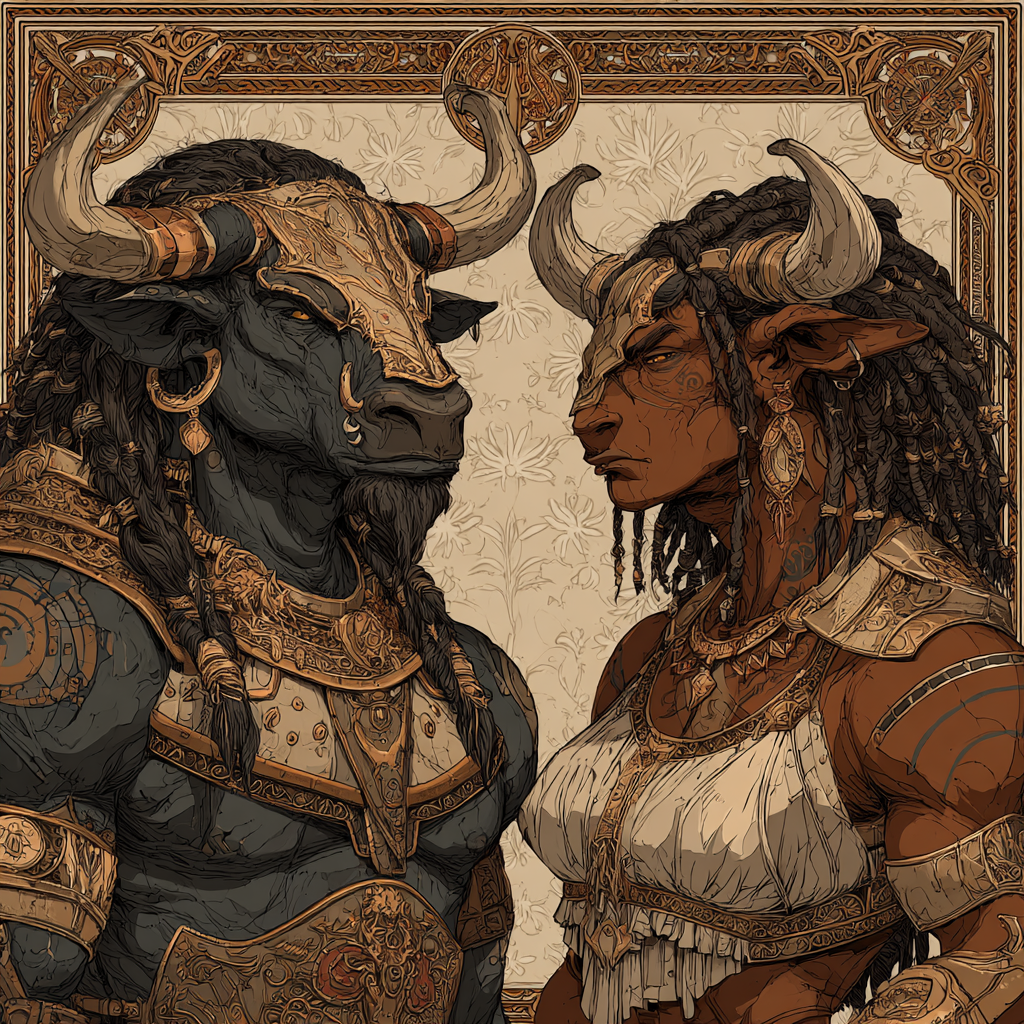
Though the minotaurs share a common origin in the First War, they did not remain a single people for long. Choice fractured them. Survival refined them. Over generations, distinct paths emerged, each reflecting a different response to the curse that shaped their bodies and the freedom that shaped their souls.What follows are the most commonly encountered lineages, along with the customs that bind them despite distance and difference.
Eannarok
Those called Eannarok are descendants of minotaurs who learned early to master the fire within themselves. They are often found guarding borders, mountain passes, caravan routes, or sacred sites, places where restraint matters as much as strength. Many serve as oath-bound protectors, not to nations, but to causes, cities, or long-standing agreements.Among the minotaurs, Eannarok are seen as proof that discipline can become a form of devotion.
Pathfinder 1e Traits (Eannarok) Ability Scores: +2 Strength, +2 Constitution, +2 Wisdom, −2 Intelligence Speed: 30 ft. Natural Attacks: Gore (1d6 piercing) Natural Armor: +1 Darkvision: 60 ft.
Demonic Legacy: Fire resistance 5; +2 racial bonus on saving throws against poison
Controlled Fury: May enter rage-like effects without risk of frenzy or loss of control
Common Classes: Paladin, Inquisitor, Fighter, Warpriest
Eannarok often bear ritual scars or sun-branded markings, earned through trials of endurance rather than battle alone.
Brazenok
Brazenok clans embrace motion, conflict, and the clarity of decisive action. They are the most feared, and most misunderstood, of the minotaur lineages. To outsiders, their raids appear cruel. To the Brazenok, they are acts of survival, retaliation, or debt-collection, governed by strict internal codes. They believe stagnation invites corruption.Pathfinder 1e Traits (Brazenok) Ability Scores: +2 Strength, +2 Constitution, +2 Intimidate, −2 Intelligence
Speed: 30 ft.
Natural Attacks: Gore (1d6 piercing)
Natural Armor: +1
Darkvision: 60 ft.
Demonic Legacy: Fire resistance 5; +2 racial bonus on saving throws against poison
Burning Charge: When charging, gore attack deals +1d6 fire damage (1/day, scaling with level)
Rage Hunger: Risk of frenzy when below half HP
Common Classes: Barbarian, Fighter, Bloodrager
Brazenok armor is often pieced together from layered hide, bronze plates, and trophies of past victories, each item marking a story rather than status alone.
Drrakthar
The Drrakthar walk the most dangerous path. These minotaurs deliberately cultivate their infernal inheritance, believing power itself to be neutral, its morality defined only by the will that wields it. Their bodies reflect this choice: blackened hides, etched runes, and horns twisted into unnatural forms.Other minotaurs tolerate them cautiously. Few fully trust them.
Pathfinder 1e Traits (Drrakthar) Ability Scores: +2 Strength, +2 Charisma, −2 Intelligence
Speed: 30 ft.
Natural Attacks: Gore (1d6 piercing)
Natural Armor: +1
Darkvision: 60 ft.
Demonic Legacy: Fire resistance 10; +2 racial bonus on saving throws against poison
Infernal Surge: 1/day, gain a demonic augmentation (extra attack, breath weapon, or enhanced strength)
Pierced Form: Count as both humanoid and outsider (native) for effects
Rage Hunger: Increased risk of frenzy under stress
Common Classes: Sorcerer, Antipaladin, Oracle
Some Drrakthar have reshaped entire regions through reckless rituals, leaving behind warped ecologies and unstable magic.


Comments