
Kolyama
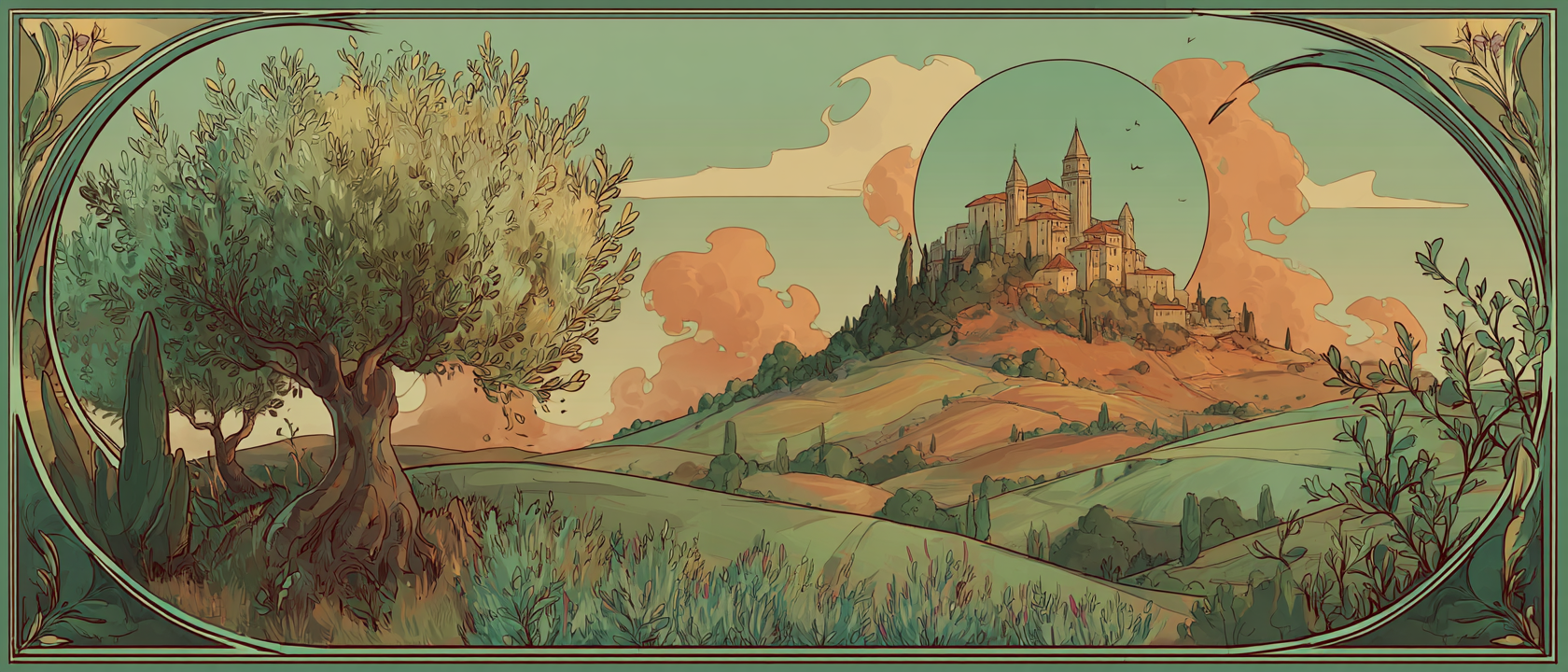
In the south of Kresla, where the light lingers longer upon the hills and the wind carries the scent of olive and lavender, there lies a land that remembers gentleness.
Kolyama was not forged in iron as Balonnor was, nor tempered by storm like Fjollum, nor measured by ledger like Narvik. It rose from soil and sun. From river and vine. From patient hands that coaxed life from the earth and believed that such life would endure. It was called the Garden of Kresla.
And for many long years, it deserved the name.
Rivers descend from the Bleak Pass Mountains in quiet abundance, their waters winding through valleys before joining broader currents. Stone bridges arch gracefully over these streams, worn smooth by centuries of travel and trade. Whitewashed villages cluster near riverbanks, their terracotta roofs glowing red at dusk.
In spring, wildflowers scatter color across the hillsides. In autumn, harvest songs drift from estate courtyards as barrels are sealed and oil is pressed from fruit.
Sixty years ago, the royal family died in a span so brief it felt like a single breath. Fever, some said. Poison, whispered others. Curse, muttered a few in darkened chapels where candles guttered too quickly.
No clear heir stepped forward, and so the vines grew tangled.
Barons fortified their estates. Dukes raised private guards. Counts claimed tolls along roads once free to all. Each lord believed themselves capable of stewardship. Each feared surrendering claim lest another seize it first.
What began as cautious positioning hardened into rivalry. Rivalry into skirmish. Skirmish into quiet war. The Garden did not burn all at once, yet a withering seeped from the heart and spread.
Now many of those halls echo differently.
Armor stands where dancers once spun. Guard rotations replace festival preparations. The banners of neighboring lords are watched not as allies, but as potential threats.
Yet even in fracture, tradition endures. Harvest feasts are held, though guarded. Wedding processions move through villages, though escorted. Songs of ancient kings are still sung, though sometimes with an edge of longing that did not once exist.
Duc Armand de Ferraille, called the Iron Duke, commands from Ironhold Chateau in the central valleys. His estate rises from a fortified hill surrounded by terraced slopes, its walls reinforced not only against rival nobles but against the southern horizon.
He is scarred from campaigns few others chose to fight. He has seen the black-sand beaches of conquered Southern Etruria and the disciplined advance of Valthor’s legions.
He calls for unity.
Some answer.
Others hesitate.
For though he speaks of survival, there are those who fear that unity beneath him may resemble kingship by another name. Thus Kolyama hesitates at the edge of storm, debating leadership while the wind shifts.
Aldanoc is invoked in estate councils and treaty signings, though fewer treaties hold long these days.
Older customs persist as well. At harvest, the first pressed oil is poured back into the earth in thanks. Bread is broken at field edges before reaping begins. Songs are sung not only to gods, but to the land itself.
Magic is regarded cautiously. The scars left by wild surges during the Fall remain in certain blighted patches where nothing grows. These areas are fenced or avoided, their soil darker than it should be.
Recently, troubling whispers have begun to circulate, of dreams shared across villages, of sleep that does not fully release its grip, of faint crimson reflections seen in river water at dusk.
The land is fertile and the roots run deeper than they should.
The Iron Duke’s coalition is disciplined, using hills and river crossings to their advantage. Yet without full support, even his preparations feel insufficient.
To the south, beyond the last terraced slopes, smoke has begun to rise. Valthor’s conquest of Southern Etruria has brought the war uncomfortably close. Supply lines creep northward along coast and road alike.
Some lords still believe the Garden’s beauty will shield it.
Others have begun sending their heirs quietly northward, toward Balonnor’s stone walls or Narvik’s river ports.
The vines continue to grow.
But vines, untended, choke themselves.
If united, the Garden could feed armies, inspire morale, and sustain resistance across Kresla. Its valleys could become bastions of hope rather than battlegrounds of pride.
Instead, it stands divided, luminous beneath a sky that darkens slowly at the edges.
The wheat still bends in golden waves.
The olives still ripen beneath patient sun.
The rivers still sing.
Yet somewhere in the soil lies the memory of a crown, and until that memory is restored or replaced, Kolyama will remain what it has become; a paradise poised between greatness and ruin.
Kolyama was not forged in iron as Balonnor was, nor tempered by storm like Fjollum, nor measured by ledger like Narvik. It rose from soil and sun. From river and vine. From patient hands that coaxed life from the earth and believed that such life would endure. It was called the Garden of Kresla.
And for many long years, it deserved the name.
A Land of Golden Breath
The hills of Kolyama roll like waves caught mid-motion, terraced in green and gold. Vineyards climb their slopes in ordered lines, each row tended with care passed down through generations. Olive trees twist their silver leaves toward the sky. Wheat bends in soft fields that shimmer beneath summer light.Rivers descend from the Bleak Pass Mountains in quiet abundance, their waters winding through valleys before joining broader currents. Stone bridges arch gracefully over these streams, worn smooth by centuries of travel and trade. Whitewashed villages cluster near riverbanks, their terracotta roofs glowing red at dusk.
In spring, wildflowers scatter color across the hillsides. In autumn, harvest songs drift from estate courtyards as barrels are sealed and oil is pressed from fruit.
The Crown That Vanished
There was a time when Kolyama stood united beneath a royal line whose authority was rarely questioned. The monarchs of the Garden did not rule through fear, but through stewardship. They understood that wealth here was not in fortresses, but in fertility; not in conquest, but in continuity. The Fall wounded Kolyama, as it wounded all lands, but it did not shatter it. Ash drifted south and dimmed the skies for a season. Crops failed in some valleys. Yet the soil remained generous, and the people endured.Sixty years ago, the royal family died in a span so brief it felt like a single breath. Fever, some said. Poison, whispered others. Curse, muttered a few in darkened chapels where candles guttered too quickly.
No clear heir stepped forward, and so the vines grew tangled.
Barons fortified their estates. Dukes raised private guards. Counts claimed tolls along roads once free to all. Each lord believed themselves capable of stewardship. Each feared surrendering claim lest another seize it first.
What began as cautious positioning hardened into rivalry. Rivalry into skirmish. Skirmish into quiet war. The Garden did not burn all at once, yet a withering seeped from the heart and spread.
Houses of Pride and Fracture
Kolyama’s nobility remains refined in bearing and fierce in pride. Their chateaus rise upon hilltops overlooking acres of vineyard and orchard, stone walls enclosing courtyards once alive with music and debate.Now many of those halls echo differently.
Armor stands where dancers once spun. Guard rotations replace festival preparations. The banners of neighboring lords are watched not as allies, but as potential threats.
Yet even in fracture, tradition endures. Harvest feasts are held, though guarded. Wedding processions move through villages, though escorted. Songs of ancient kings are still sung, though sometimes with an edge of longing that did not once exist.
The Iron Duke
Among the fractured lords stands one figure who speaks not of ambition, but of necessity.Duc Armand de Ferraille, called the Iron Duke, commands from Ironhold Chateau in the central valleys. His estate rises from a fortified hill surrounded by terraced slopes, its walls reinforced not only against rival nobles but against the southern horizon.
He is scarred from campaigns few others chose to fight. He has seen the black-sand beaches of conquered Southern Etruria and the disciplined advance of Valthor’s legions.
He calls for unity.
Some answer.
Others hesitate.
For though he speaks of survival, there are those who fear that unity beneath him may resemble kingship by another name. Thus Kolyama hesitates at the edge of storm, debating leadership while the wind shifts.
Faith in the Soil
Eanna’s presence is felt deeply in Kolyama. Her light warms the fields. Her renewal is seen each spring in new growth from pruned vine. Shrines to her stand at crossroads and vineyard entrances, garlanded with fresh blossoms.Aldanoc is invoked in estate councils and treaty signings, though fewer treaties hold long these days.
Older customs persist as well. At harvest, the first pressed oil is poured back into the earth in thanks. Bread is broken at field edges before reaping begins. Songs are sung not only to gods, but to the land itself.
Magic is regarded cautiously. The scars left by wild surges during the Fall remain in certain blighted patches where nothing grows. These areas are fenced or avoided, their soil darker than it should be.
Recently, troubling whispers have begun to circulate, of dreams shared across villages, of sleep that does not fully release its grip, of faint crimson reflections seen in river water at dusk.
The land is fertile and the roots run deeper than they should.
War Among the Vines
Kolyama’s military strength lies dormant in potential rather than cohesion. Each noble house maintains levies and retainers, armored in mismatched steel and loyalty. Cavalry drills cut lines through fields meant for harvest.The Iron Duke’s coalition is disciplined, using hills and river crossings to their advantage. Yet without full support, even his preparations feel insufficient.
To the south, beyond the last terraced slopes, smoke has begun to rise. Valthor’s conquest of Southern Etruria has brought the war uncomfortably close. Supply lines creep northward along coast and road alike.
Some lords still believe the Garden’s beauty will shield it.
Others have begun sending their heirs quietly northward, toward Balonnor’s stone walls or Narvik’s river ports.
The vines continue to grow.
But vines, untended, choke themselves.
The Fragile Promise
Kolyama’s tragedy is not weakness of land or spirit. It is abundance unchecked and unguided.If united, the Garden could feed armies, inspire morale, and sustain resistance across Kresla. Its valleys could become bastions of hope rather than battlegrounds of pride.
Instead, it stands divided, luminous beneath a sky that darkens slowly at the edges.
The wheat still bends in golden waves.
The olives still ripen beneath patient sun.
The rivers still sing.
Yet somewhere in the soil lies the memory of a crown, and until that memory is restored or replaced, Kolyama will remain what it has become; a paradise poised between greatness and ruin.
Kolyama - Realm of the Golden Plains
Regional Ledger
Government: Feudal monarchy under the High Crown of Kolyama Capital: Kolyamar (Golden Crown City) Population: ~1,800,000 across plains and river valleys
Major Settlements
Kolyamar (capital)
Valenreach
Sunfield
Thornbridge
Primary Exports
Wheat and barley grain
Warhorses and riding stock
Linen and wool textiles
Mead and honey
Primary Imports
Iron weapons and armor (Balonnor, Daggenfell)
Stone and worked metal
Timber from northern forests
Wine from the Silver Mist Hills and Etruria
Trade Routes
River caravans west toward Narvik
Overland grain caravans south toward Balonnor
Northern frontier trade through the Silver Mist Hills
Military Strength
~18,000 professional soldiers
~25,000 levy infantry and militia during wartime
Elite knightly orders drawn from noble houses
Strategic Importance
Breadbasket of eastern Kresla
Controls major agricultural supply for several neighboring realms


Comments