
Etruria
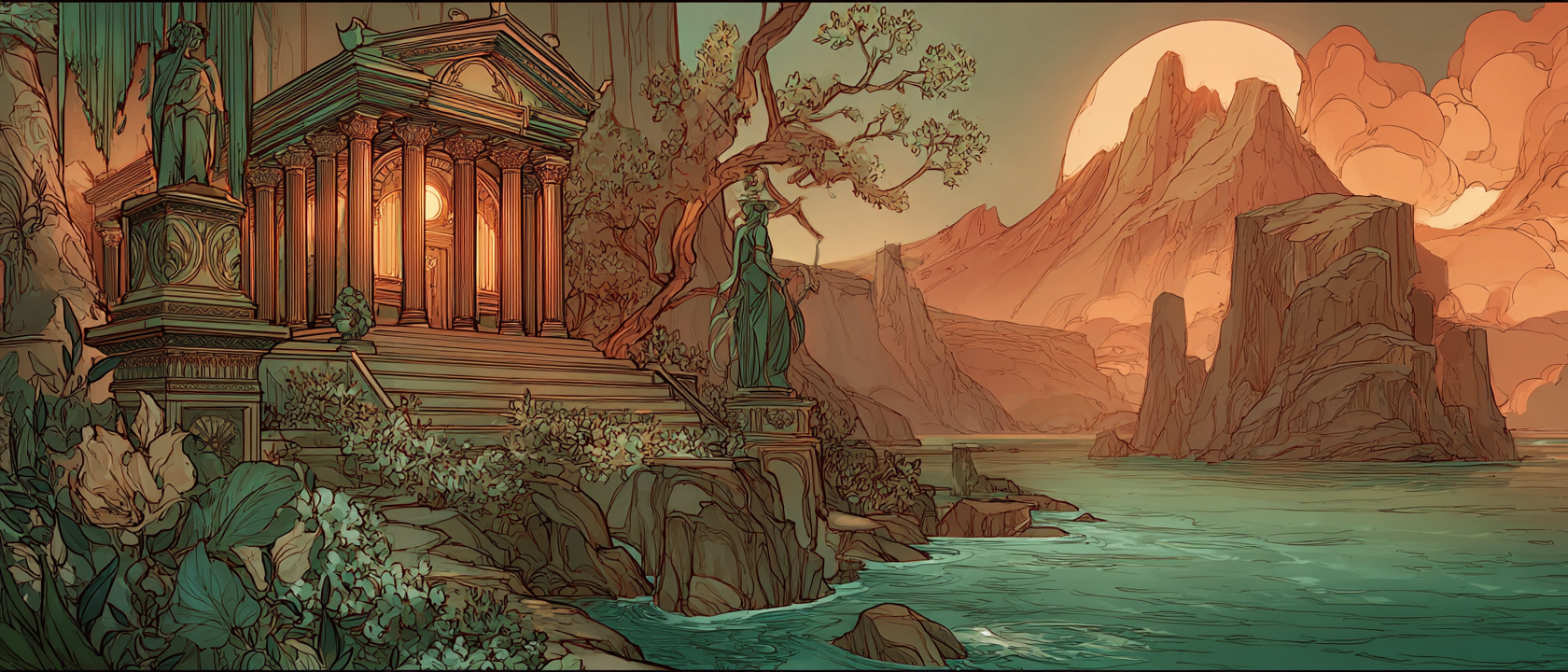
Far to the southeast, where the sea turns warm and restless and the horizon trembles in summer haze, the islands of Etruria rise from the waters like embers cast from a greater fire.
Their shores are black with ancient ash. Their hills are terraced in green and gold. Their cities cling to volcanic slopes, carved into calderas that once roared with molten fury and now cradle harbors bright with sailcloth and salt.
Etruria has always lived between fire and water, and has learned to survive both.
The soil was rich beyond reason. Every eruption of ages past had layered the land with new life. Vineyards grew thick along slopes that might once have glowed red. Orchards flourished in valleys formed by ancient collapse. Even the poorest villages seemed touched by abundance.
Yet prosperity built atop fire is never wholly secure.
When the Fall tore at the world, the tremors reached even these distant shores. Dormant peaks groaned. Ash fell again upon fields thought long safe. Entire towns vanished beneath lava or were choked by smoke so thick the sun itself seemed to falter.
Their mountains are steeper, their forests denser, their harbors protected by high caldera walls. In Port Caldera, a city nested within the bowl of an extinct volcano , the merchant-princes gathered what remained of their fleets and swore not fealty to a king, but unity among themselves, establishing a council of rule.
Thus Northern Etruria was forged not by bloodline, but by necessity.
Its streets wind through black stone buildings warmed by sea air and colored with bright banners. Markets spill into terraced plazas where citrus and wine are traded alongside carved volcanic glass. Council chambers echo with debate , passionate, precise, unyielding.
Here, authority rests in ships and silver, but courage commands deeper respect. The Prince-Consul, chosen from among the wealthiest and most capable, must balance profit with preservation.
For though Northern Etruria thrives, it does so beneath shadow. Its fleets now sail not merely for commerce, but for war.
They strike swiftly at enemy supply lines. Fire-ships drift like false stars before erupting in ruin. Coastal watchtowers burn through the night, scanning the horizon for crimson sails.
Southern Etruria fell early to Valthor the Crimson. Wyvern shadows passed over black beaches before many understood what they were seeing. Skyhammer strikes shattered harbor defenses. Governors were replaced. Councils dissolved. Ashport, once a jewel of maritime trade, now serves as artery for conquest. Its docks groan under foreign command. Wine presses continue to turn, but their yield feeds armies rather than festivals.
Yet conquest has not extinguished spirit entirely.
In hidden coves, old captains whisper of rebuilding fleets. In hillside vineyards, resistance passes quietly between families. Barrels of oil and wine disappear from official tallies, redirected in ways that cannot easily be traced.
Even in wartime, these traditions persist. Not as denial, but as defiance. Architecture reflects this duality. Whitewashed walls gleam against black volcanic stone foundations. Arches and colonnades frame vistas of sea and sky. Beauty is not abandoned, even when threatened.
Eanna is honored in the fertility of vine and orchard. Aldanoc is invoked in council chambers where alliances are weighed. Tarsaralei’s temper is feared when storms churn harbors into chaos.
Yet older reverence lingers. Offerings are cast into volcanic fissures. Ash is scattered upon water at remembrance rites. Glass charms are worn to ward off “mountain wrath.”
Etrurians understand that the land which feeds them once nearly destroyed them. They treat it accordingly.
Fragments of rose-colored stone have been found embedded in old coastal ruins, their origin debated quietly among scholars.
Some claim that when the Rose fell, something in the deep earth shifted even here , that the volcanoes quieted not by coincidence, but by consequence. If such ties exist, they remain hidden beneath ash and tide.
But in certain caves along the southern coast, glass formed in strange patterns that seem almost deliberate. And in the caldera depths of Port Caldera, tremors occasionally ripple without visible cause.
If the north falls, Valthor will command the southeastern waters entirely. His fleets would move unchallenged toward Kolyama’s vulnerable coast and beyond. If the north endures, the war remains costly for him.
Their shores are black with ancient ash. Their hills are terraced in green and gold. Their cities cling to volcanic slopes, carved into calderas that once roared with molten fury and now cradle harbors bright with sailcloth and salt.
Etruria has always lived between fire and water, and has learned to survive both.
Born of Flame
Long before the Fall reshaped Kresla, Etruria was a single, unified realm, a chain of volcanic lands bound together by trade and shared ambition. Merchant-princes ruled from basalt halls carved into the ribs of sleeping mountains. Their fleets moved confidently across sea lanes, bearing wine, citrus, olive oil, and glass that shimmered like captured night.The soil was rich beyond reason. Every eruption of ages past had layered the land with new life. Vineyards grew thick along slopes that might once have glowed red. Orchards flourished in valleys formed by ancient collapse. Even the poorest villages seemed touched by abundance.
Yet prosperity built atop fire is never wholly secure.
When the Fall tore at the world, the tremors reached even these distant shores. Dormant peaks groaned. Ash fell again upon fields thought long safe. Entire towns vanished beneath lava or were choked by smoke so thick the sun itself seemed to falter.
The Northern Flame
From ruin, the northern islands rose first.Their mountains are steeper, their forests denser, their harbors protected by high caldera walls. In Port Caldera, a city nested within the bowl of an extinct volcano , the merchant-princes gathered what remained of their fleets and swore not fealty to a king, but unity among themselves, establishing a council of rule.
Thus Northern Etruria was forged not by bloodline, but by necessity.
Its streets wind through black stone buildings warmed by sea air and colored with bright banners. Markets spill into terraced plazas where citrus and wine are traded alongside carved volcanic glass. Council chambers echo with debate , passionate, precise, unyielding.
Here, authority rests in ships and silver, but courage commands deeper respect. The Prince-Consul, chosen from among the wealthiest and most capable, must balance profit with preservation.
For though Northern Etruria thrives, it does so beneath shadow. Its fleets now sail not merely for commerce, but for war.
They strike swiftly at enemy supply lines. Fire-ships drift like false stars before erupting in ruin. Coastal watchtowers burn through the night, scanning the horizon for crimson sails.
The Southern Ash
To the south, the story is harsher.Southern Etruria fell early to Valthor the Crimson. Wyvern shadows passed over black beaches before many understood what they were seeing. Skyhammer strikes shattered harbor defenses. Governors were replaced. Councils dissolved. Ashport, once a jewel of maritime trade, now serves as artery for conquest. Its docks groan under foreign command. Wine presses continue to turn, but their yield feeds armies rather than festivals.
Yet conquest has not extinguished spirit entirely.
In hidden coves, old captains whisper of rebuilding fleets. In hillside vineyards, resistance passes quietly between families. Barrels of oil and wine disappear from official tallies, redirected in ways that cannot easily be traced.
A Culture Between Celebration and Caution
Etrurians are passionate by nature, expressive in gesture and song. Their festivals are vivid affairs, harvest dances beneath strings of lanternlight, citrus garlands draped from balconies, music echoing across water at dusk.Even in wartime, these traditions persist. Not as denial, but as defiance. Architecture reflects this duality. Whitewashed walls gleam against black volcanic stone foundations. Arches and colonnades frame vistas of sea and sky. Beauty is not abandoned, even when threatened.
Eanna is honored in the fertility of vine and orchard. Aldanoc is invoked in council chambers where alliances are weighed. Tarsaralei’s temper is feared when storms churn harbors into chaos.
Yet older reverence lingers. Offerings are cast into volcanic fissures. Ash is scattered upon water at remembrance rites. Glass charms are worn to ward off “mountain wrath.”
Etrurians understand that the land which feeds them once nearly destroyed them. They treat it accordingly.
The Sea and the Scar
Though distant from the Silver Mist Hills, Etruria remembers the Rose City. Trade once flowed between marble and basalt, between grain and glass.Fragments of rose-colored stone have been found embedded in old coastal ruins, their origin debated quietly among scholars.
Some claim that when the Rose fell, something in the deep earth shifted even here , that the volcanoes quieted not by coincidence, but by consequence. If such ties exist, they remain hidden beneath ash and tide.
But in certain caves along the southern coast, glass formed in strange patterns that seem almost deliberate. And in the caldera depths of Port Caldera, tremors occasionally ripple without visible cause.
The Divided Future
Northern Etruria fights to remain sovereign. Southern Etruria labors under foreign rule. Between them stretches sea, sometimes bridge, sometimes barrier.If the north falls, Valthor will command the southeastern waters entirely. His fleets would move unchallenged toward Kolyama’s vulnerable coast and beyond. If the north endures, the war remains costly for him.
Regional Ledger
Government: Merchant republic (northern islands) / Warlord occupation (southern islands) Capital: Port Caldera Population: ~600,000 across the island chain
Major Settlements
Port Caldera
Ashport
Solmara
Vinehaven
Primary Exports
Wine and citrus fruits
Volcanic glass and fine ceramics
Olive oil and preserved seafood
Primary Imports
Grain from Kolyama
Timber from northern forests
Iron and steel from Daggenfell
Trade Routes
Southern sea trade across the eastern ocean
Maritime routes connecting to Balonnor and Narvik
Military Strength
Northern fleets ~120 warships
Southern forces under Valthor’s control
Strategic Importance
Dominates southeastern sea trade
Naval gateway between Kresla and distant lands


Comments